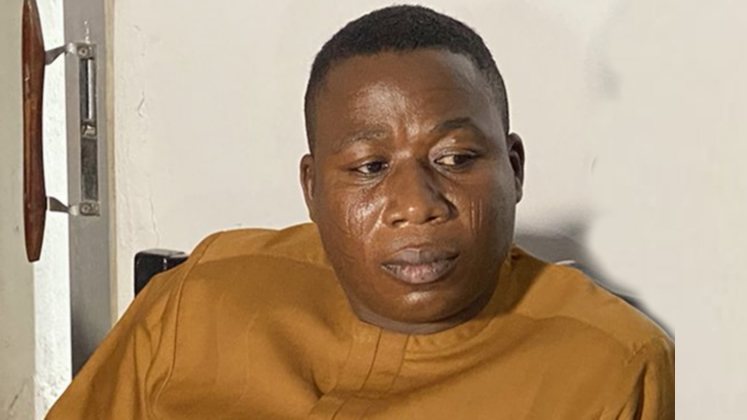
Sunday Igboho is waiting for the Federal Government to approve his plan to start the Iru Ekun Security Network, a group he says will fight insecurity across the South-West.
Igboho, the Yoruba activist who gained prominence during the 2021 agitation for a separate Yoruba nation, has shifted focus to forming what he calls a security outfit to tackle the rising wave of kidnappings, armed robbery, and banditry plaguing the region. The proposed network bears the name Iru Ekun, which translates to "lion's pride" in Yoruba, signalling his intention to project strength and protection.
The outfit, according to information from Igboho's camp, will operate across the six South-West states of Oyo, Osun, Ondo, Ekiti, Lagos, and Kwara. It is designed to work in tandem with existing security agencies rather than replace them, though details on the exact structure and operational framework remain sparse. Igboho has made it known that he is seeking formal clearance from the Federal Government before the network becomes fully operational.
This move comes at a time when many communities in the South-West have grown frustrated with the pace of government action on insecurity. Residents have repeatedly complained about inadequate police presence and slow response times to distress calls. Vigilante groups and community security arrangements have sprouted across the region, filling what many see as a security vacuum. Igboho's proposed network appears to be an attempt to formalise and scale up such efforts under one umbrella.
However, Igboho's history makes his bid for official approval uncertain. The activist fled Nigeria in 2021 after the Department of State Services raided his Ibadan home, accusing him of stockpiling weapons. He was later arrested in Benin Republic and spent months in detention before he was released. His return to Nigeria came quietly, and his pivot from separatist agitation to formal security work marks a significant change in strategy.
The Federal Government has not yet made a public statement on Igboho's request. Security experts remain divided on whether such a network would help or complicate the security situation. Some argue that formal recognition of community-based security outfits could improve coordination and intelligence gathering, while others warn that legitimising armed groups outside the state monopoly could create fresh challenges.
Igboho's next steps depend on how quickly the government processes his application and whether officials decide that formalising his outfit serves the national interest.