
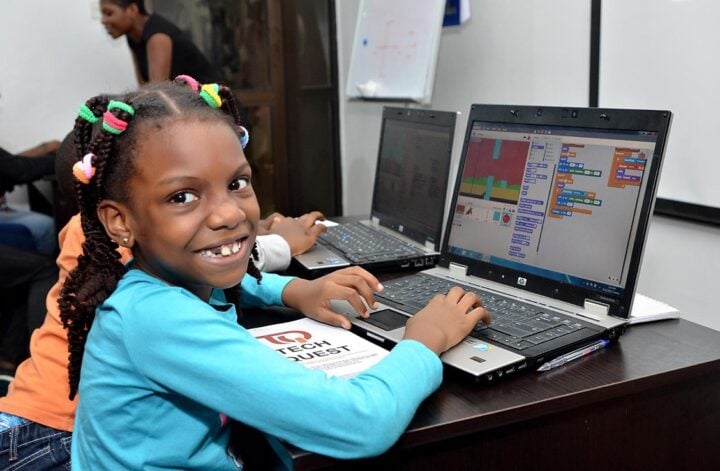
Sweden's two-decade experiment with digital classrooms has ended in a striking reversal: the Scandinavian country has begun removing screens from its schools, convinced that technology is harming rather than helping students learn.
For more than twenty years, Swedish policymakers championed classroom screens as the future of education. They invested heavily in tablets, interactive whiteboards, and laptops, believing technology would unlock better outcomes and prepare children for a digital world. The bet seemed sensible. It failed.
Swedish researchers eventually found that students who spent more time on screens performed worse academically than those who relied on traditional teaching methods. The impact cut across subjects. Reading comprehension suffered. Mathematical reasoning declined. The longer children stared at devices, the further behind they fell. Teachers reported that digital distractions fragmented student attention. A child handed a tablet can switch between the lesson and games or social media within seconds. Paper and pen cannot offer the same escape.
Nigeria faces this decision now, even as schools remain under-resourced. Many public schools lack basic infrastructure: electricity, functioning toilets, textbooks in quantity. Yet the temptation to leapfrog directly to technology is real. Tech companies market tablets and digital learning platforms aggressively in African countries, often framing screens as the missing piece that will bridge educational gaps and prepare Nigerian students to compete globally.
Sweden's experience suggests otherwise. The country's educators discovered that screens work best as tools for specific tasks, not as replacements for direct teaching. A child learning to read needs a teacher's voice, the chance to ask questions in real time, and the cognitive space that comes from focused work on paper. A tablet in a crowded classroom with inconsistent electricity and no teacher training simply becomes another barrier.
The Swedish pullback carries a harder lesson too: resources matter more than gadgets. Sweden could afford to experiment with screens because its schools already had quality teachers, small class sizes, and functioning facilities. When the screens failed to improve outcomes, schools removed them. Nigeria's immediate priority cannot be replacing what it has not yet built.
Education experts now point to Sweden's reversal as a cautionary tale for countries considering rapid technology adoption. The country plans to continue scaling back screen time in primary education, with policymakers emphasizing human interaction and traditional literacy skills. Other Nordic nations are watching closely, and some have begun similar reductions.


