
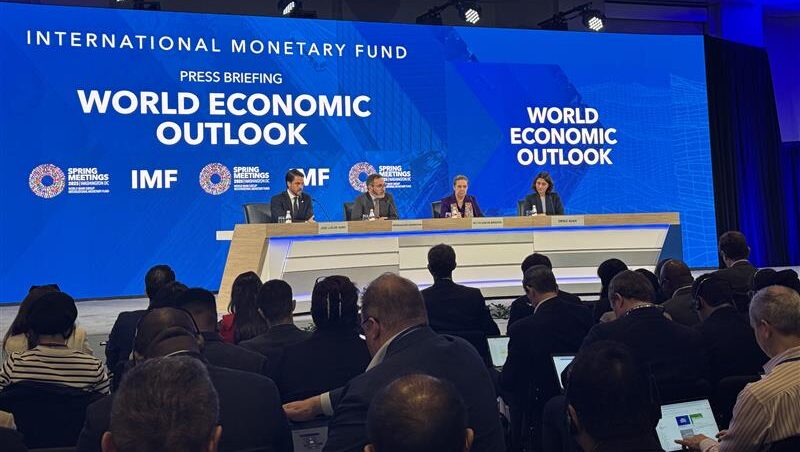
The International Monetary Fund released a stark warning on Thursday, stating that more than 20 million people across sub-Saharan Africa face the threat of moderate or severe food insecurity as global prices continue to climb. The alert came through the IMF's April 2026 Regional Economic Outlook report, titled "Hard-Won Gains Under Pressure," which examined recent growth trends affecting the region.
The fund's assessment paints a troubling picture for one of the world's most vulnerable populations. Price surges in essential commodities have created a precarious situation where millions of households struggle to afford basic food items. The IMF's analysis focused on how inflation and global market dynamics are eroding the purchasing power of ordinary Africans, particularly in countries already grappling with weak currencies and limited foreign exchange reserves.
Sub-Saharan Africa has made progress in recent years, but the report indicates that these gains now face serious pressure from external shocks. The region's economies depend heavily on food imports, making them susceptible to global price fluctuations. When international commodity prices rise, African consumers feel the immediate impact through higher costs at local markets.
The IMF's warning extends beyond mere statistics. Food insecurity carries cascading effects across entire societies. Malnutrition rates climb, children miss school days due to hunger, productivity falls, and healthcare systems become overwhelmed treating preventable hunger-related illnesses. The fund recognizes that without intervention, the social fabric of affected communities could tear further.
Nigeria, as Africa's largest economy by GDP, remains particularly vulnerable to these pressures. Although the country produces significant quantities of food domestically, inflation has eroded real wages and purchasing power across urban and rural populations. Families that once bought three meals daily now stretch budgets to afford one or two.
The IMF report serves as a call to action for both national governments and the international community. The fund's economists stress that policymakers must address inflation through monetary policy discipline, invest in agricultural productivity, and establish social safety nets to protect the poorest households. Without such measures, the projection of 20 million people facing food insecurity could prove conservative.
Donor nations and multilateral institutions are watching closely as sub-Saharan African governments respond to this challenge. The World Food Programme and other humanitarian organisations have already begun scaling up operations in anticipation of increased need. Regional leaders face difficult choices between supporting food security and maintaining fiscal discipline demanded by international creditors.
The timing of this warning coincides with harvest seasons in many African countries, though production levels remain uncertain due to climate variability. Some nations have experienced recent droughts, further reducing local food supply and driving dependence on imports. The IMF's projection assumes current price trajectories continue, meaning any additional global shocks could worsen the outlook considerably.
Over the coming months, the IMF will monitor how sub-Saharan African governments implement responses to this food security crisis. The fund expects to release updated assessments in its mid-year review, which will measure progress in addressing inflation and protecting vulnerable populations from the worst effects of price surges.