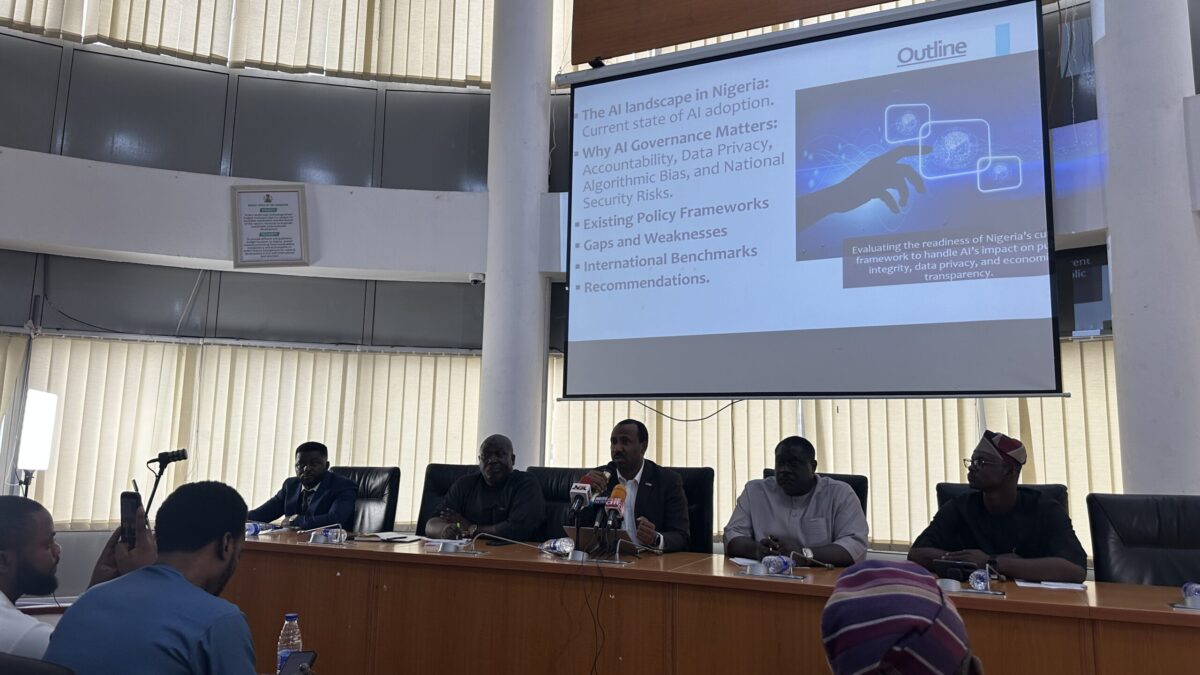
Technology experts have called on the federal government to establish a dedicated regulatory body to govern artificial intelligence operations across the country, citing mounting security threats that the nation remains unprepared to handle. The experts raised alarm over Nigeria's lack of AI-specific standards, leaving the country exposed to fraud schemes, organised disinformation campaigns, data poisoning attacks, and automated cybercrime that criminals increasingly exploit.
The call for action comes as artificial intelligence deployment accelerates globally and within Nigeria's financial services, telecommunications, and public sectors. Without proper oversight and clear guidelines, the experts argued that Nigeria risks becoming a target for bad actors who exploit regulatory gaps to launch attacks on unsuspecting citizens and institutions.
Fraud represents one of the most immediate threats posed by unregulated AI systems. Criminals use machine learning algorithms to identify vulnerabilities in banking systems, create convincing deepfakes for social engineering attacks, and automate large-scale scam operations that overwhelm traditional law enforcement response capabilities. Nigeria's booming fintech sector, which processes billions of naira daily, remains particularly vulnerable to these attacks.
Disinformation campaigns powered by AI present another serious concern flagged by the experts. Sophisticated algorithms can generate and spread false information at scale, manipulating public opinion during elections, triggering communal violence, or destabilising financial markets. The 2023 general elections saw instances of AI-generated misinformation, yet no government body had the mandate or technical capacity to respond effectively.
Data poisoning attacks, where criminals inject corrupted data into AI training systems, can compromise the integrity of critical infrastructure and government decision-making tools. A poisoned AI system might approve fraudulent transactions, misidentify security threats, or provide inaccurate health diagnostics. Nigeria's nascent efforts to digitise government services create opportunities for such attacks if security standards are not established upfront.
Automated cybercrime represents the fourth major threat area. Hackers deploy AI-powered tools to scan networks continuously for vulnerabilities, launch coordinated attacks across multiple systems simultaneously, and adapt their tactics in real time to evade detection. Nigerian banks, telecommunications companies, and government agencies have reported increasing cyber incidents, yet lack standardised defences or reporting frameworks.
The experts stressed that establishing a regulatory body would serve multiple functions. Such an agency would set mandatory standards for AI development and deployment, conduct security audits of AI systems used in critical sectors, investigate incidents when they occur, and coordinate with international partners on emerging threats. The body would also need authority to impose penalties on organisations that violate standards and fail to implement adequate safeguards.
Current gaps in Nigeria's regulatory framework mean no single government agency holds clear responsibility for AI governance. The National Information Technology Development Agency, the Central Bank of Nigeria, and the National Communications Commission each oversee parts of the digital ecosystem, but no unified approach exists. This fragmentation creates blind spots where threats slip through undetected and unaddressed.
The experts recommended that the federal government begin work immediately on drafting AI governance legislation and establishing the regulatory infrastructure. They suggested the process should involve technical specialists, cybersecurity professionals, representatives from affected industries, civil society organisations, and academics. International best practices and lessons from countries like the United Kingdom, the European Union, and Singapore should inform Nigeria's approach.
The regulatory body would need adequate funding, technical staff with deep AI expertise, and independence to make enforcement decisions without political interference. Without these foundational elements, the agency would lack credibility and effectiveness. The experts also called for transparency in regulatory processes, ensuring that rules affecting businesses and citizens are developed openly and subject to public consultation.
Nigeria's technology sector leaders acknowledged the need for regulation while expressing concern that poorly designed rules could stifle innovation. They urged the government to work collaboratively with industry to craft standards that protect against genuine security threats without imposing unnecessary burdens on startups and established tech companies. The balance between security and innovation represents a key challenge the regulatory body will face.
The federal government has not yet announced plans to establish an AI regulator or timeline for introducing AI governance legislation. The National Information Technology Development Agency indicated openness to discussions on AI oversight but stated that formal policy development requires input from multiple ministries and stakeholders across government. Industry observers expect the process could take several months to begin producing concrete regulatory proposals.
Meanwhile, the risks outlined by the experts continue to grow as AI adoption accelerates. Banks increasingly deploy AI systems for fraud detection and customer service without standardised security certifications. Media organisations experiment with AI-powered content creation tools that could accidentally or deliberately spread misinformation. Government agencies explore AI applications in tax administration, healthcare delivery, and public security. Each deployment without proper oversight adds to Nigeria's vulnerability.
The federal government is expected to convene formal consultations on AI governance within the coming months, bringing together the National Information Technology Development Agency, the Central Bank of Nigeria, the National Communications Commission, the Ministry of Communications and Digital Economy, and private sector representatives to chart a path forward.