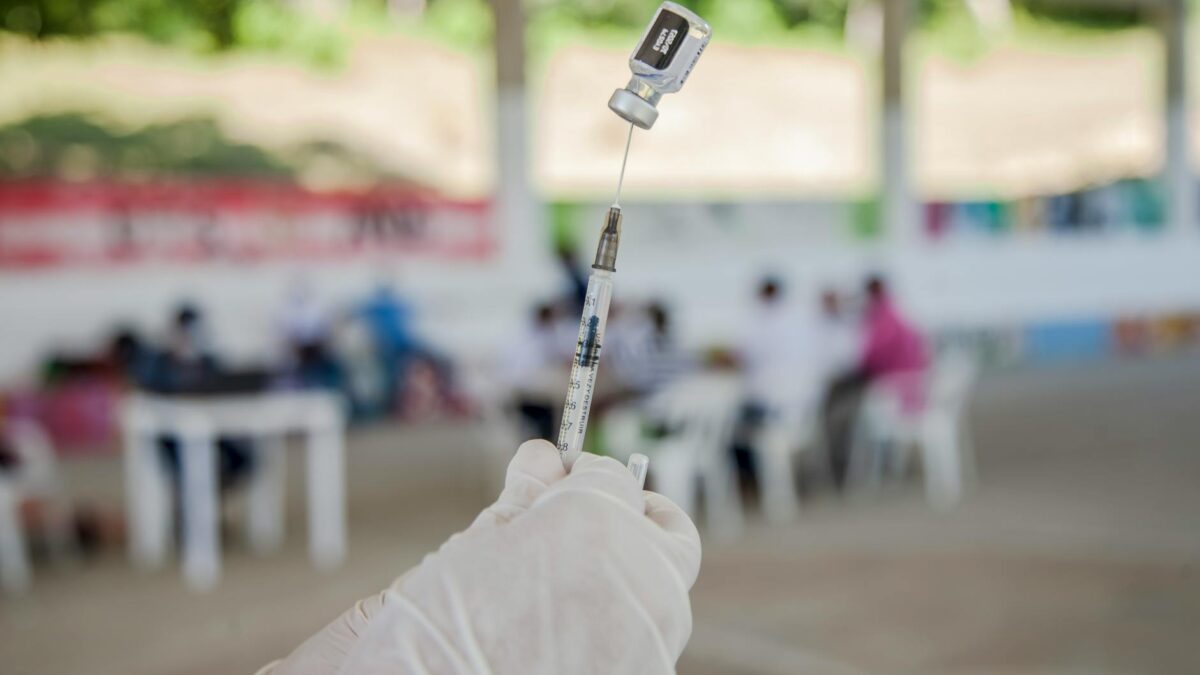
The United Nations Children's Fund launched a targeted immunisation drive on Thursday in Badagry, Lagos State, to reach 2.2 million Nigerian children who have never received a single routine vaccine. The intervention, backed by the Republic of Korea, represents a coordinated effort between international agencies, Korean authorities, and Nigerian health officials to identify and vaccinate so-called zero-dose children in underserved urban settlements, border communities, and remote areas.
Wafaa Saeed, UNICEF Nigeria Country Representative, described the immunisation gap as both a moral and development emergency. She stressed that millions of Nigerian children remain excluded from life-saving vaccines due to systemic gaps rather than vaccine ineffectiveness. Nigeria holds the highest number of zero-dose children across Africa and ranks among the highest globally, Saeed said at the launch event.
The core challenge, Saeed explained, is not vaccine quality but access and equity. Systemic barriers prevent vulnerable children from receiving protection against preventable diseases. She called for strong political leadership and partnerships to address these gaps. The UNICEF representative underscored that reaching zero-dose children extends beyond health intervention; it serves as a national development priority that strengthens human capital, productivity, and social cohesion.
Saeed warned that true success would depend on building sustainable systems. She said the health sector must develop mechanisms that continue identifying, reaching, and protecting every child well beyond the current investment period. The partnership aims to strengthen Nigeria's primary healthcare systems, support routine immunisation delivery, rebuild community trust, and ensure vaccines reach children historically left behind by existing services.
The Republic of Korea justified its investment by citing growing global health security threats. Consul General Lee Sang Ho noted that Nigeria's high number of unvaccinated children poses a significant danger to global health security, particularly given Nigeria's status as a high-burden African nation. Korea has earmarked $5.6 million (approximately 8.4 billion Naira at current exchange rates) for Nigeria under the current programme phase.
The intervention targets 40 local government areas across six states and the Federal Capital Territory. The beneficiary regions include Lagos, Ogun, Niger, Bauchi, Adamawa, and the FCT. This geographical spread reflects the widespread nature of the zero-dose crisis across Nigeria's diverse communities, from densely populated urban centres to border regions and difficult-to-access settlements.
Lagos State Commissioner for Health Akin Abayomi, represented by a director from the State Ministry of Health, emphasised the urgency of addressing zero-dose children in Lagos. The state faces particular challenges due to rapid urban expansion and rising population pressures that strain existing health infrastructure. Abayomi noted that zero-dose and under-immunised children remain persistent problems, especially in densely populated and hard-to-reach communities across the state.
The programme will deploy data-driven strategies to identify vulnerable populations and tailor interventions accordingly. Health workers at the frontline will receive strengthened support and resources to expand equitable vaccine access. The partnership demonstrates how global cooperation can address local health challenges through sustained commitment and resource allocation to under-resourced communities.
The zero-dose crisis stems from multiple factors including poverty, limited health infrastructure in remote areas, cultural beliefs, insecurity in some regions, and lack of awareness about vaccine importance. The intervention seeks to address these underlying causes while building trust between communities and health systems. By focusing on the most vulnerable populations, the programme aims to create pathways for sustained immunisation coverage that benefits entire communities.
The Korean government's involvement reflects broader commitment to strengthening health systems in African nations through the Access to COVID-19 Tools Accelerator framework. This framework initially emerged during the pandemic response but has expanded to address routine immunisation gaps and general health system strengthening. Korea's partnership with UNICEF and Nigerian authorities signals recognition that health security requires collective action across borders.
Future expansion of the programme depends on performance during the initial phase across the targeted 40 local government areas. The partnership will monitor vaccination coverage improvements, community engagement levels, and health system capacity gains throughout implementation. Results from these initial phases will inform strategies for scaling up interventions to additional states and communities across Nigeria.