
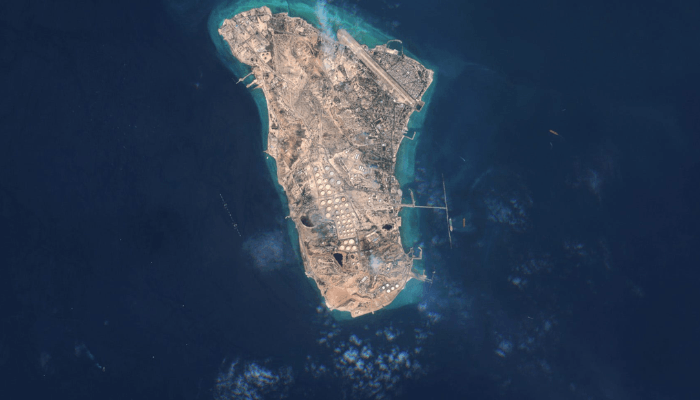
Donald Trump, the United States President, has proposed a full naval blockade of the Strait of Hormuz, a narrow waterway that connects the Persian Gulf to global markets. The plan has sent shockwaves through African economies already struggling with rising inflation and energy costs. Market analysts warn that such a blockade could trigger a global oil supply crisis with devastating consequences for the continent.
The Strait of Hormuz remains one of the world's most critical shipping routes. Approximately 30 percent of global oil exports pass through this narrow passage daily. For African nations, particularly those without substantial domestic oil reserves, any disruption to this route poses a direct threat to energy security and economic stability.
The proposal follows sustained United States and Israeli military operations in the Middle East. These strikes have intensified regional tensions and created an already volatile security environment. Trump's blockade plan represents an escalation that could further destabilize an already fragile region.
African oil importers face immediate concerns about energy prices. Countries including Nigeria, South Africa, Kenya, and Egypt depend heavily on imported petroleum products to fuel their economies. A full blockade would restrict oil supplies entering global markets, driving prices upward. Higher energy costs would increase production expenses for manufacturers, transportation costs for businesses, and fuel prices for consumers.
Nigeria, Africa's largest oil producer, would face indirect effects despite its domestic production capacity. The country exports crude oil and depends on refined petroleum imports from global markets. A blockade that reduces global supply would increase competition for available oil, driving import costs higher. Nigerian businesses and consumers would ultimately bear these increased expenses.
South Africa's manufacturing sector remains particularly vulnerable to energy price shocks. The country already battles severe electricity shortages from its state-owned power utility. Additional oil price increases would compound existing energy challenges and threaten industrial output. Mining operations, refineries, and transportation networks would all face higher operational costs.
Egypt controls the Suez Canal, another critical shipping route for Middle Eastern oil heading toward Europe and Africa. While the Suez route provides an alternative to the Hormuz Strait, capacity constraints mean both waterways handle complementary traffic volumes. Disruptions to Hormuz would increase pressure on Egyptian waterway capacity and potentially lead to congestion.
Economists warn that oil price spikes could trigger inflation across Africa. Energy costs feed into the broader economy through transportation, electricity generation, and manufacturing. When energy becomes more expensive, businesses pass these costs to consumers through higher prices for goods and services. Inflation particularly harms low-income households that spend larger portions of their income on fuel and food.
The financial markets have already registered concern about Trump's proposal. Oil futures have fluctuated on reports of the blockade plan. Investors worry that uncertainty about Middle Eastern stability could lead to prolonged price increases. African stock exchanges have shown volatility as foreign investors reassess their portfolios.
Regional leaders have begun coordinating responses to the potential blockade threat. Several African nations have called for diplomatic solutions to the Middle East crisis rather than military escalation. The African Union has emphasized the continent's dependence on stable global energy markets and open shipping routes.
Trade groups representing African manufacturers and transport operators have publicly warned about the economic fallout. The Chamber of Commerce across multiple African nations has called on the United States to reconsider the blockade plan. Business leaders argue that such action would harm not only Middle Eastern nations but also developing economies dependent on affordable energy.
Some analysts suggest African nations could explore alternative energy sources to reduce vulnerability to Middle Eastern disruptions. Solar energy expansion, wind power development, and natural gas exploration have been mentioned as potential long-term solutions. However, such transitions require significant capital investment and time to implement.
Other experts recommend African governments diversify their oil supplier base. Rather than depending primarily on Middle Eastern imports, nations could develop relationships with producers in Latin America, Central Asia, and other regions. Diversification would reduce the impact of any single regional crisis on African energy security.
The blockade remains a proposal at this stage, not yet implemented policy. The Trump administration has not released detailed timelines or operational parameters for how such a blockade would function. Nevertheless, the mere prospect has created uncertainty that ripples through African economies dependent on predictable energy costs.
African finance ministers are expected to discuss Trump's blockade plan at upcoming continental economic meetings. The meetings will likely focus on contingency planning and coordinated responses to potential energy price shocks. Ministers may also explore emergency funding mechanisms to help vulnerable nations cope with rising import costs.
The United States State Department has not issued formal statements clarifying whether Trump's blockade proposal represents official policy or merely rhetorical positioning. This ambiguity has complicated African governments' ability to develop concrete response strategies. Clarity on American intentions would allow policymakers to make informed decisions about energy investments and economic planning.