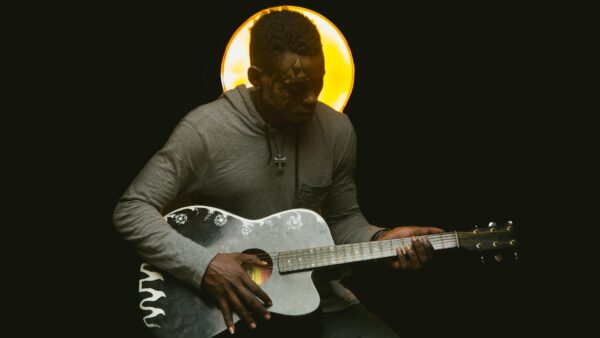

The beat that opens "Stupid Love," the Kizz Daniel track that spent weeks on every playlist in 2024, came from someone most people still cannot name. Adekunle Gold, a 28-year-old producer working out of a modest studio in Yaba, shaped the sonic texture that made that song feel inevitable the moment you heard it, a balance of Afrobeats weight and something almost introspective, a production choice that told you something about where Lagos music was heading before the streaming numbers confirmed it.
Gold grew up in Mushin, raised on his father's vinyl collection and his mother's insistence that he finish secondary school before pursuing "this music thing." He was already making beats on a cracked copy of FL Studio by age fourteen, uploading instrumentals to SoundCloud under three different aliases because he was not sure which version of himself he wanted to be. By sixteen, he had already produced for two underground rappers from Ikorodu, beats that never charted but taught him the difference between what sounds good in headphones and what sounds good in a Lagos club at three in the morning. That distinction would matter later.
His breakthrough came quietly, the way good production breakthroughs often do. In 2022, he produced "Gravity," a track for Santi that circulated among producers and musicians before anyone else heard it. The track had a particular spaciousness to it, room for breath, which was rare in Afrobeats production at the time. People started asking for Adekunle Gold beats. He started turning down offers. That discipline, that refusal to flood the market, became his signature.
What separates Gold from the dozens of Lagos producers making competent beats is his understanding of texture and restraint. Listen to "Smoke and Mirrors," produced for Olamide last year, and you hear what sounds like a simple track until you notice the subtle strings underneath, the way the drums sit slightly behind the beat creating an almost hypnotic tension. It is the kind of production choice that makes you listen three times before you understand why it works. He has worked with Burna Boy's camp, with Wizkid's engineers, with producers like Kel-P and P-Prime, learning their methods not by asking but by paying attention.
The industry started noticing him properly around mid-2024 when "Essence of Lagos," a producer's tape he released independently, circulated among music directors and filmmakers. Each track on the project told a story about a different part of the city, not with words but with sound. The track "Lekki Dawn" became the unofficial theme for at least two indie films shot in Lagos that year. He had done something that few producers in the Nigerian scene attempt: made instrumental music that felt like narrative, like it had stakes.
Right now, in early 2026, Gold is in the middle of a quiet revolution. He is working on production for two major label albums that have not been announced yet, and he is mentoring four younger producers from Lagos neighborhoods like Bariga and Ajah, teaching them the same lesson his own mentors taught him indirectly: production is not about what you can do, it is about what the song needs. He is also designing a production kit that will be released sometime this year, a collection of samples and patches that other Lagos producers are already requesting previews of.
What matters about Gold is not just the quality of his work, though the quality is there in every layered kick drum and unexpected melodic choice. What matters is that he is building a version of Lagos music production that values listening, that respects the listener's intelligence, that assumes the audience is smart enough to hear what is underneath the surface. In a scene dominated by maximalism, by more features, more drops, more everything, he is proving that subtlety can chart. His Instagram, which he barely updates, has become a place where other producers study his work, breaking down his techniques in comment threads. Younger beatmakers tag him in their posts asking for feedback. He almost always responds.
There is a particular moment in "Stupid Love," about two minutes in, where the production drops almost to silence before rebuilding itself. That moment, that breath, is Adekunle Gold telling you that he understands something about how music lives in the body, how a song needs to make room for you to feel it. That understanding is going to matter for whatever comes next.
OduDiscover is OduNews’s spotlight on Nigeria’s next generation of talent.