
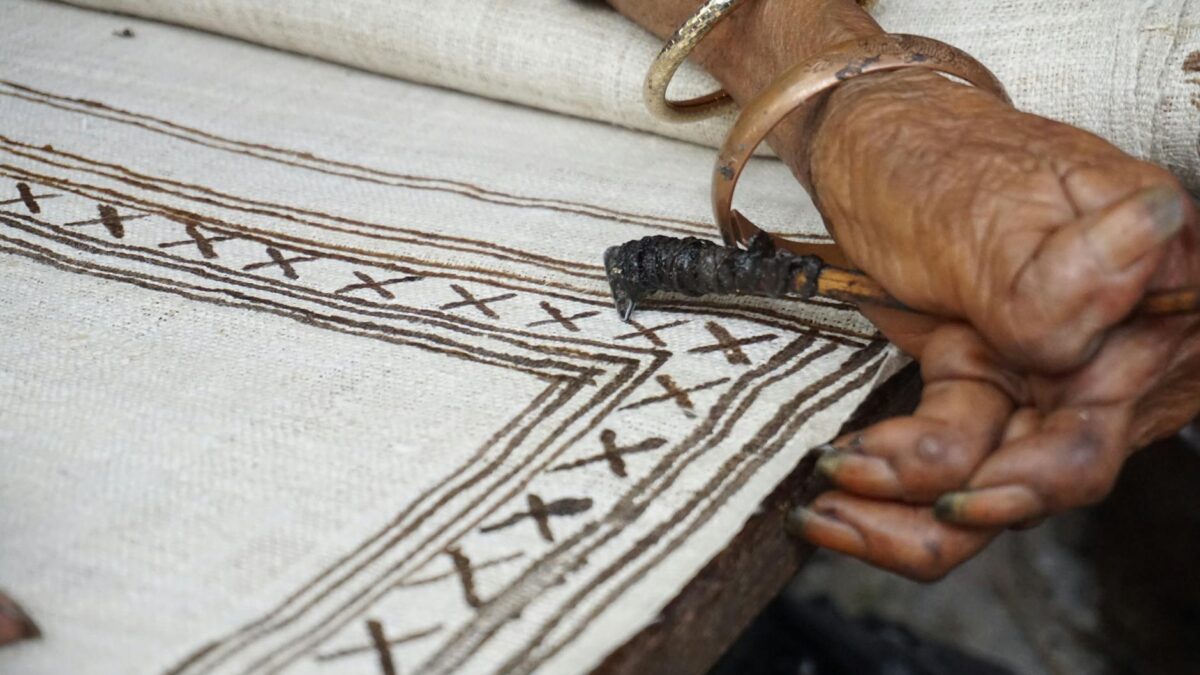
When Tunde Ikutayo posted a video on Instagram last October showing him hand-dyeing indigo fabric in a studio space in Abeokuta, the comments section filled with people asking the same question: where can I buy this? The video had no music, no filters, no performance. Just his hands in deep blue water, the cloth moving like something alive, and the kind of focused silence that only craftspeople understand. That post got 47,000 views. More importantly, it got the attention of three major hospitality groups who wanted him to design custom textile pieces for their properties.
Tunde is a textile and interior designer working out of Ogun State, and he is doing something that feels necessary right now: he is taking Yoruba aesthetic principles, the kind you see in traditional weaving and indigo work and beadwork, and he is translating them into a language that works for contemporary Nigerian interiors and fashion. Not by diluting the tradition. By understanding it so deeply that he can make it speak to someone designing a modern home in Ikoyi or someone tired of generic industrial furniture.
He grew up in Ibadan, third of six children, in a household where his mother was a seamstress and his father worked in textile production. By the time he was fourteen, Tunde had already apprenticed under a master weaver in Osogbo for three months during a school holiday, learning to read patterns the way some people read text. He studied graphic design at Federal Polytechnic Auchi because that is what felt practical, what parents understood. But the entire time he was there, he was buying indigo, teaching himself the chemistry of natural dyes, studying photographs of Yoruba textile work from museum archives.
After polytechnic, he moved to Lagos like everyone else. Worked at a design consultancy for two years doing corporate identity work. Hated it. The money was fine but the work felt like filling templates. In 2021, during the lockdown when everyone was rethinking their lives, Tunde moved back to Abeokuta, rented a compound space with good light and water access, and started making textile pieces without a business plan. He was just making things. Indigo-dyed cotton. Adire patterns he had learned from elderly women in Ibadandland, documented in his notebook. Bespoke pieces for friends who understood what he was doing.
By 2023, he had caught the attention of Bukola, the interior designer who furnished the new Four Points hotel in Ikoyi. She gave him a major commission: create a cohesive textile design system for all the guest rooms, hallways, and lobby spaces. Tunde spent four months studying the architecture of the space, the light at different times of day, and then he created a collection inspired by the Ataoja crown from Osogbo, the geometric language of that piece translated into something wearable as curtains, something liveable in a hotel room. When the hotel opened in August 2024, the pieces became quietly iconic. Interior designers in Lagos started asking who made those textiles. The answer kept coming back to Tunde.
What makes his work different is that he refuses to infantilize tradition. He does not make things that feel like museum pieces or tourist art. A scarf he designed last year, a collaboration with a Lagos-based fashion brand, took the visual language of regberegbe patterns and condensed them into something you could actually wear, something that felt both deeply rooted and immediately current. The scarf sold out in two weeks. He has since done similar work for three other Nigerian fashion labels, all of them seeing the commercial potential in having something that reads as authentically Yoruba without being precious about it.
Right now, in early 2026, Tunde is working on something bigger. He is designing the textile and color palette for a boutique hotel opening in Osogbo later this year. He is also in conversation with a Lagos furniture maker about creating a limited furniture line using his textile designs. More quietly, he is mentoring two young people from his community who want to learn indigo work, the kind of knowledge transfer that rarely happens anymore because it is not monetized. He sees that as important. The craft dying out matters to him more than whether he personally gets rich.
The thing about Tunde is that he understands something that many designers miss: culture is not a costume you put on for aesthetics. It is a living thing. When you work with it seriously, when you study it the way he studied those patterns, it teaches you things about proportion and balance and intention that no design school curriculum can. That is what you see in his work. Not decoration. Architecture.
OduDiscover is OduNews’s spotlight on Nigeria’s next generation of talent.