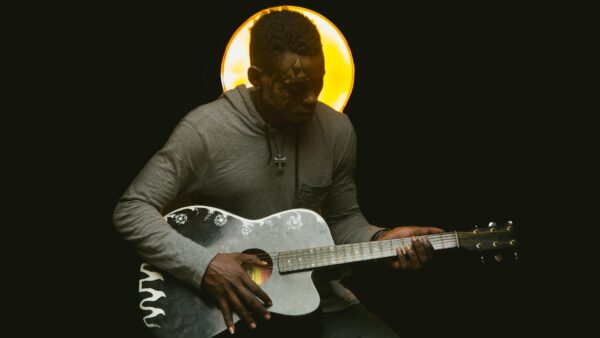

When Ema Onigah released "With You" last year, something happened quietly. Not the kind of moment that breaks the internet or sends Twitter into a frenzy, but the kind that makes people who actually listen to music stop what they are doing. The song arrived with smooth Afro-fusion melodies that felt neither forced nor overworked, lyrics that knew how to sit in the space between desire and tenderness, and a voice that carried emotional weight without needing to prove it. What made it remarkable was what it did not do. It did not chase a trend. It did not shout. It simply existed as something fully formed, a song about love that understood nuance.
Ema Onigah is not new to music, but the industry is still learning his name. He comes from that generation of Nigerian artists who grew up watching the explosion of Afrobeats, the global domination of Wizkid and Burna Boy, the reinvention of the sound across a thousand bedrooms with FL Studio and YouTube tutorials. He watched it all, absorbed it, and then chose to do something different. Instead of chasing the percussion-heavy, club-ready energy that has defined so much of modern Nigerian music, Onigah built his sound from romance and introspection, from the kind of songs that feel like late-night conversations with someone you care about.
His background is less the typical "grew up in a musical family" story and more the reality of most contemporary Nigerian musicians, the ones who actually build sustainable careers. He spent years learning production, understanding arrangement, studying how melodies sit in ears and why some hooks stay with you while others evaporate. He listened to everything. The Afrobeats wave, obviously, but also the sophistication of older Nigerian highlife, the emotional intelligence of soul music, the precision of contemporary R&B. That eclecticism shows up in his work as restraint rather than confusion, as the mark of someone who knows what to include and crucially what to leave out.
"With You" introduced a significant portion of Nigerian listeners to what Onigah has been building. The production is clean and minimalist in a way that suggests intentionality rather than budget constraints. There is space in the arrangement, room for his voice to move, acoustic textures that sit behind modern production rather than drowning in it. The song explores emotional connection without becoming saccharine, desire without becoming crude. This matters because Nigerian music has a way of swallowing subtlety, of assuming that if something is not overwhelming it must not be working. Onigah disagrees, and the evidence is in every track.
What separates him from the dozens of other Nigerian artists making Afro-fusion is consistency of vision. His catalogue reveals someone who has thought deeply about what his sound is and what it is not. He is not competing for space in the Lagos nightclub circuit or making content optimized for TikTok virality. He is making music for people who have specific emotional needs, who want songs that acknowledge the complexity of loving someone, of wanting something, of building something real. That is a smaller audience than the one chasing the biggest clubs and the biggest streams, but it is an audience that stays.
The real test of where Onigah sits right now is in the lack of saturation. You can actually still discover him. You do not need to compete with a thousand other people learning about him at the same time. His music has not yet reached that point of inevitable mainstream recognition, but the infrastructure is there. He makes songs strong enough to sustain long listens, good enough to recommend to people whose taste you respect. The energy in Nigerian music right now is all maximalism and velocity, everyone moving toward the next thing. Onigah is building something that requires patience, which in this era feels like a quiet act of resistance. His next move will tell us whether he pushes toward the mainstream light or stays in the space he has carved out, and honestly, either path will say something worth listening to.
OduDiscover is OduNews’s spotlight on Nigeria’s next generation of talent.