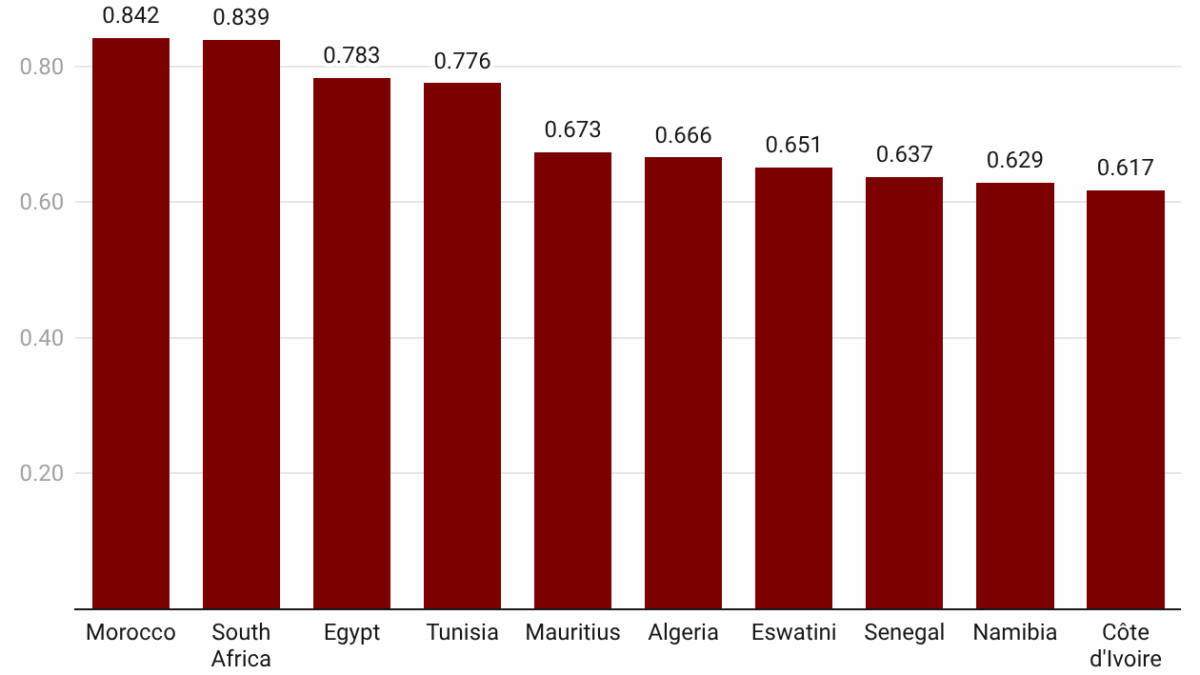
Morocco has pushed past South Africa to become Africa's biggest industrial economy, breaking a 15-year streak of South African dominance. The shift marks a turning point in the continent's economic hierarchy, with Morocco's aggressive push into manufacturing and export-driven industries finally paying off.
South Africa held the top spot for over a decade, relying on its established mining sector, energy production, and manufacturing base. But Morocco took a different path. The country invested heavily in factory infrastructure, special economic zones, and skills training to attract global manufacturers looking for alternatives to Asia. It worked.
Marocco's automotive sector became the real game-changer. European carmakers, including Renault and Peugeot, built factories there because of the country's proximity to Europe, lower labour costs, and free trade agreements with major markets. The country also pushed into aerospace manufacturing, textiles, and electronics assembly. Within a few years, these sectors were pumping billions of dollars into the Moroccan economy and creating hundreds of thousands of jobs.
South Africa, meanwhile, faced persistent power cuts from its state-owned utility Eskom, which crippled manufacturing and scared away investors. Labour unrest, rising operational costs, and infrastructure decay made the country less attractive to multinational companies. While South Africa's mining sector remained large, it was not enough to keep the country ahead in overall industrial output.
Marocco's government also made strategic moves that South Africa did not. It simplified business registration, cut red tape for investors, and negotiated bilateral trade deals across Africa and Europe. The country positioned itself as a gateway to African markets while maintaining strong ties to Europe, giving it a unique advantage.
Economists say the change reflects broader shifts on the continent. Manufacturing is moving away from countries with unreliable power supplies and high costs towards those with stable governments and clear industrial plans. Morocco's neighbour Tunisia also made gains, though not enough to challenge for the top spot.
For South Africa, the loss of its industrial crown is a wake-up call. The country still has natural resources and a large economy, but without urgent fixes to its power crisis and investment in new sectors, further slippage is likely. Morocco's success shows that with the right policies and infrastructure, smaller African economies can compete at the highest level.