Thousands of Yoruba people descended on Ijebu-Ode in Ogun State for the 2026 Ojude Oba festival, a centuries-old celebration held each year in the days after Eid al-Adha, and turned the streets into a showcase of coordinated fashion, beaded accessories, and cultural pageantry that left little doubt about the depth of tradition still alive in Nigeria.
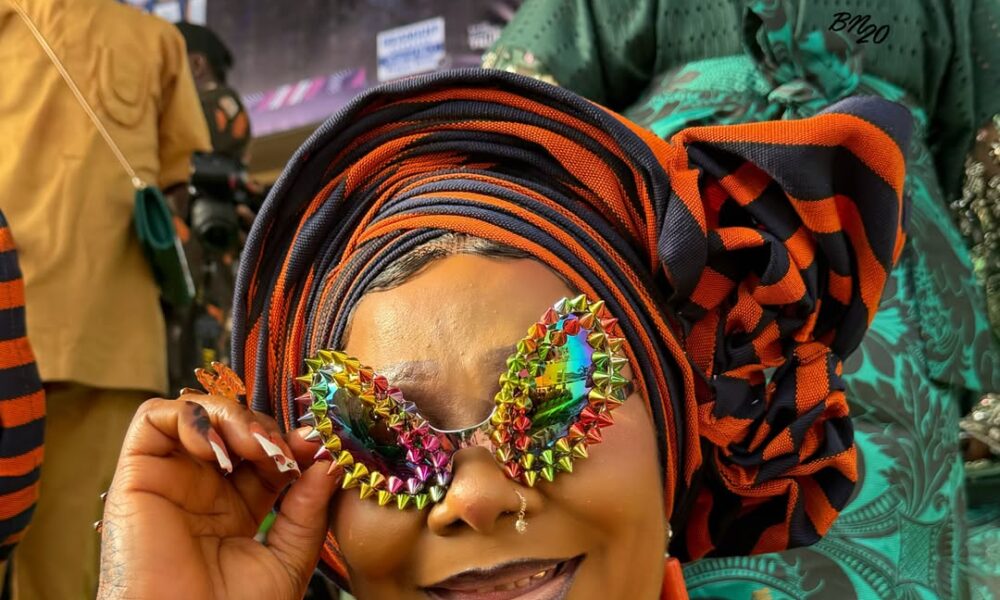
The festival, one of Nigeria's most significant Yoruba cultural gatherings, drew attendees dressed with deliberate care and attention to detail that suggested this was less about casual celebration and more about honouring an inheritance. Women arrived in bùbá and ìró made from rich aso-oke, adire, and lace, each outfit anchored by coral beads, embroidered hand fans, matching shoes and purses, and sunglasses and parasols that transformed the afternoon sun from inconvenience into backdrop. The men matched that energy with agbadas that fit well and caps positioned just right, the overall effect one of cultural pride worn without apology.
Every accessory carried weight. Statement pink parasols sat against coordinated cream and gold damask attire. Golden traditional Yoruba crowns, heavy with yellow beads, rhinestones, and hanging bead fringes, crowned several heads. Some women wore frameless eyewear constructed entirely of gold chains and hanging crystals that draped across the nose and cheeks. Others carried metallic fan purses as part of regberegbe group uniforms, or held custom woven beige horse-tail style purses over matching aso-oke. Wide-lens shield sunglasses bordered with dense multicoloured glitter appeared alongside stone-embellished versions and structured gold-rimmed rectangular frames. The detail suggested coordination within family groups and lineages, with each person's choices reinforcing collective identity rather than standing alone.
Then the regberegbe groups moved through Ijebu-Ode on horseback, each lineage riding in formation to the sound of drums and the roar of spectators. The horses themselves were styled in bold, coordinated traditional colour patterns. Cultural staffs and beaded walking sticks complemented the riders' agbadas. The parade was not performance in the sense of theatre separate from life. It was a living, breathing piece of Ijebu history moving through the crowd, and everyone present seemed to understand they were witnessing something that had lasted for well over a century and would likely last for generations more.
The Ojude Oba festival continues to draw participants precisely because it asks something of them: not just attendance, but commitment to the aesthetics and values of Yoruba culture, worn visibly and shared publicly. That commitment showed on every street in Ijebu-Ode during the 2026 edition, from the smallest bead placement to the largest horse parade formation.