
The Nigerian Senate reversed a controversial amendment to its Standing Orders on Thursday, scrapping a rule that would have allowed the Clerk of the National Assembly to swear in all newly elected senators instead of just the Senate President and his deputy.
Senate Leader Opeyemi Bamidele moved the reversal motion during plenary presided over by Senate President Godswill Akpabio. Bamidele argued that the amended rules conflicted with Section 52 of the 1999 Constitution, which guarantees senators-elect the right to participate in the election of presiding officers before taking their oaths. The Senate had adopted the amendments just days earlier, on Tuesday.
"Election of the officers will have to take place, as it had always been, before the swearing-in of senators," Bamidele told the chamber. He said further constitutional review revealed the amended rules could create "constitutional inconsistencies and unintended tensions." The Senate voted to rescind the changes through a voice vote with no prolonged debate.
Akpabio endorsed the reversal immediately. "This is a very straightforward motion," he said. "It is just for us to go in conformity with the constitution. I thank the Leader for being observant and up to the game."
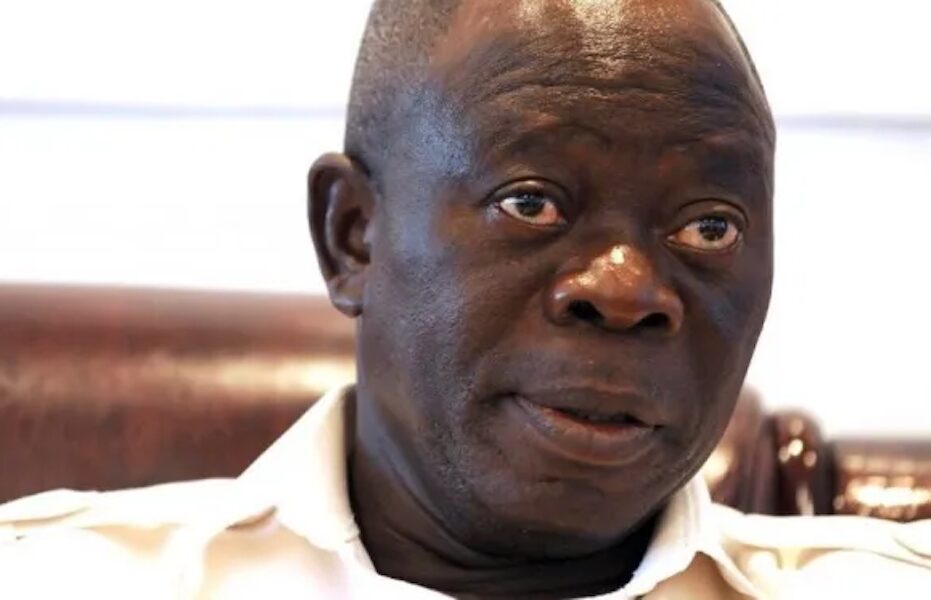
The decision prompted immediate tension when former Edo State Governor Adams Oshiomhole rose on a point of order to criticise the handling of both the original amendment and its reversal. Oshiomhole, a former president of the Nigeria Labour Congress, said the Senate had acted hastily without proper consultation among members. "I believe the average age in this Senate is over 40, and so we don't have an excuse for youthful exuberance," he said.
Oshiomhole called for more deliberative lawmaking. "When we are making a law, we should accommodate diverse views. That way, what one person forgot, the other person will remember. The only point I want to make is that next time we should allow debate."
Although Akpabio initially told Oshiomhole the matter was closed and reopening it violated Senate rules, he granted the senator permission to speak anyway. That decision backfired when Bamidele launched a sharp rebuttal, describing Oshiomhole's intervention as "unnecessary drama" that had overshadowed the Senate's legislative work in the media.
"Yesterday, I saw the kind of drama that went on," Bamidele said, visibly displeased. "Regardless of what was done in this hallowed chamber yesterday, what became the news out of this chamber was that unnecessary drama. And we are not going to allow this to continue."
Bamidele stressed that if senators disagreed with amendments, they should follow proper parliamentary procedure rather than creating public controversy. He expressed concern that the uproar from Tuesday's rule change had damaged the Senate's image and distracted attention from its legislative achievements.
The Tuesday amendment had sparked confusion in the chamber about the proper procedure for swearing in new lawmakers. Bamidele's intervention resolved the constitutional question, but his sharp words to Oshiomhole exposed underlying tensions about how the Senate conducts business and manages dissent.