
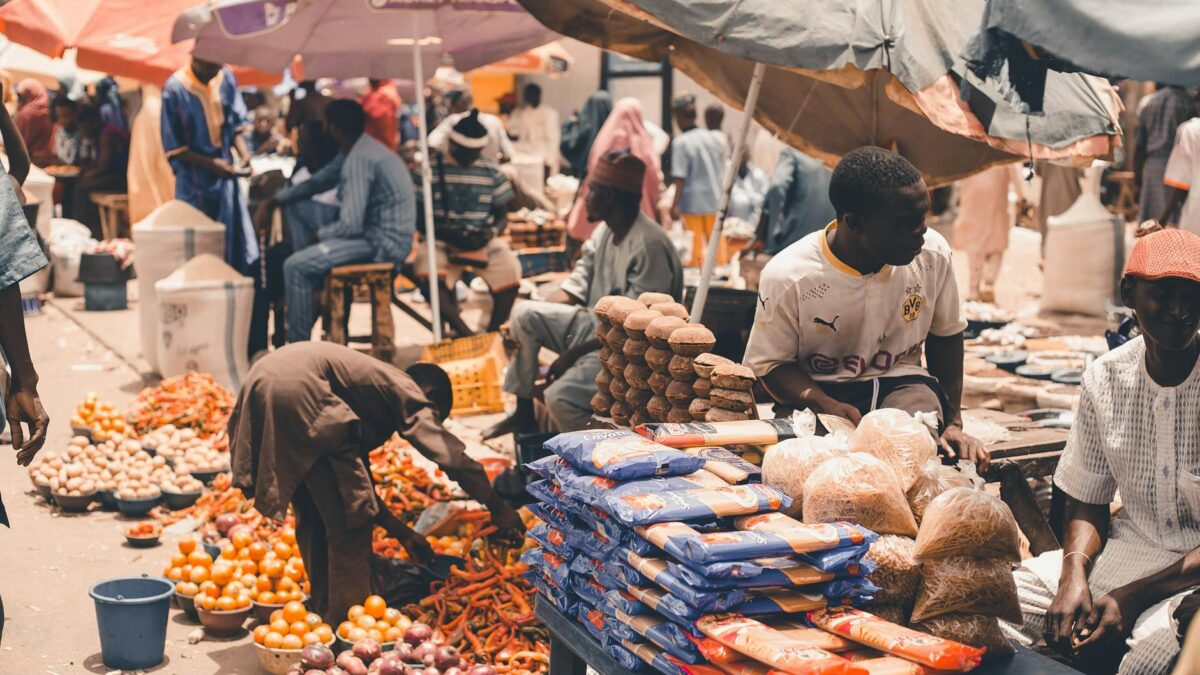
President Bola Tinubu acknowledged last week that Nigerians are struggling with the rising cost of living. He did not say this grudgingly or defensively. He said it as a fact he understands, in the middle of explaining why the pain is necessary. "I know what Nigerians are going through," he said, describing the reforms as medicine that tastes bitter but will heal the economy. This admission changes nothing about the price of garri or the cost of transport to work. But it matters more than it seems because it represents a shift in how the president is choosing to talk about his own policies.
For eighteen months, the Tinubu administration has pursued a consistent line: the reforms are working, the economy is recovering, inflation is coming down. All of these things have elements of truth. Inflation has moderated from its peak of 34 percent in December 2023 to 29.9 percent in January 2025. The naira has stabilized somewhat. Foreign exchange reserves have risen. The macro numbers, in the language of economists, are moving in the right direction.
But Nigerians do not live in macro numbers. They live in the price of bread, the cost of medications, the ability to pay school fees. A person earning 50,000 naira a month in Lagos cannot eat macro recovery. By any serious measure, the average Nigerian household is worse off than it was two years ago. Energy prices tripled. Fuel prices went up fivefold. Food inflation exceeded 40 percent for months. A study by the Brookings Institution in mid-2024 found that poverty in Nigeria had increased by 4 million people since the reforms began. That is not an outlier figure. It is a straightforward calculation of how many more Nigerians fell below the poverty line.
The usual defense of the Tinubu administration goes like this: these reforms were necessary. The previous government had borrowed heavily and spent on subsidies that distorted the market. The currency was overvalued. The fiscal situation was unsustainable. All of this is true. It is also true that painful reforms are sometimes necessary. No one disputes that the old system was broken. The argument is whether the pain has been distributed fairly and whether the government has done enough to cushion the landing for ordinary people.
Here is where Tinubu's recent admission becomes significant. If he understands that Nigerians are struggling, then the question becomes: what is the administration actually doing about it beyond waiting for the reforms to eventually work? The government has announced palliatives. There was the transport voucher scheme. There were statements about supporting small businesses. But the scale of these interventions does not match the scale of the problem. When inflation is 30 percent and food prices have tripled, a transport voucher that covers a few trips is not a serious policy response. It is theater.
A government that genuinely understood the depth of the crisis would have done several things by now. It would have pursued aggressive local food production policies instead of relying on imports that are destroyed by a weak naira. It would have invested heavily in power generation so that manufacturing costs fall and prices moderate. It would have controlled corruption in government procurement so that more money reaches actual development instead of leaking away. It would have had a real timeline for when food inflation specifically would return to single digits, not just general talk about the economy improving.
The counterargument, and it is a serious one, is that these things take time. Structural reforms do not work overnight. Nigeria's electricity problems took decades to create. They will not be solved in two years. True enough. But other countries have managed painful reforms while protecting the poor more effectively than Nigeria has done. When Mexico implemented its reforms in the 1990s, it created targeted programs for the poorest households that helped them through the transition. When Indonesia reformed its energy subsidies in the early 2000s, it designed the policy to exempt the poor and used the savings from subsidy cuts to fund social programs. Nigeria did none of this with any real scale or sophistication.
What makes Tinubu's admission valuable, then, is that it opens space for a conversation about whether the current policy approach is adequate. The government cannot hide behind abstract economic theory anymore. The president has acknowledged that real people are suffering real hardship. The next question is whether the administration will respond with policies that match the scale of that suffering, or whether the acknowledgment is simply a rhetorical gesture meant to buy patience while ordinary Nigerians get poorer.
The reforms will likely continue. No government announces a reversal of major economic policy because of public pressure, especially not in Nigeria where political constraints are limited. But the administration does have choices about how the reforms are implemented and what complementary policies run alongside them. It can choose to make food security a national emergency and fund it accordingly. It can choose to make electricity generation a priority that commands real resources and cuts through bureaucratic delays. It can choose to design safety nets that actually protect the vulnerable instead of providing symbolic comfort.
Tinubu has admitted the truth. Nigerians are struggling. The question now is whether he will act like someone who understands that, or whether this acknowledgment is simply the price he pays in words for a policy he will not change in practice.
OduViews represents the editorial opinion of OduNews.