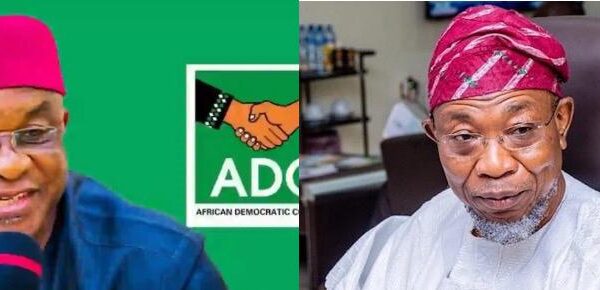

The Action Democratic Party held a strategic National Executive Committee meeting as opposition leaders across Nigeria explore the party as a viable platform for the 2027 general elections. Sources within ADP told BusinessDay that former Vice President Atiku Abubakar and other prominent opposition figures are actively considering the party ahead of the presidential race. This comes as the Independent National Electoral Commission conducts verification exercises for registered political parties countrywide.
The shift toward ADP reflects growing uncertainty within the African Democratic Party, where internal divisions have left some opposition leaders seeking alternatives. Party insiders said the ADP meeting focused on strengthening the party's organisational structure and preparing it for potential influx of new members and candidates. The timing of the meeting coincides with INEC's ongoing verification process, which determines which parties meet the requirements to field candidates in the 2027 elections.
Atiku's exploration of ADP represents a significant repositioning for the former Vice President, who led the Peoples Democratic Party's presidential campaign in 2023. His interest in ADP signals that some opposition camps view the party as offering a fresh start away from the internal politics that have plagued larger opposition parties. Several other notable opposition politicians have privately indicated they are considering ADP as a platform, according to sources familiar with the discussions.
The ADP's emergence as a focal point for opposition reorganisation reflects deeper fractures within Nigeria's opposition coalition. The ADC, which briefly attracted opposition attention, has struggled with internal management issues that have weakened its position as a unifying force. Party officials at ADP's NEC meeting reportedly discussed strategies to position the party as a credible third force in Nigerian politics, separate from both the ruling All Progressives Congress and the PDP.
ADP leadership has moved to strengthen the party's institutional capacity ahead of what sources described as a potentially transformative election cycle. The party's registration with INEC remains valid, and officials confirmed that the party is undergoing the verification process required by the electoral commission. Party insiders said discussions at the NEC meeting included broadening the party's appeal beyond its traditional base and creating internal structures to accommodate incoming members from other parties.
The exploration of ADP by opposition leaders comes against a backdrop of widespread dissatisfaction with the current political arrangement and competition within opposition camps over who leads the 2027 challenge to President Bola Tinubu. Multiple sources confirmed that conversations between ADP leadership and prospective candidates have intensified over the past two months. Some opposition stakeholders view the party as a compromise option that allows ambitious politicians to distance themselves from the baggage of larger, fractious parties.
INEC's verification exercises will determine which parties can field candidates in the 2027 elections. The electoral commission has set timelines for parties to complete the verification process, and sources said ADP is on track to meet all requirements. The party's status as a registered entity with a national structure gives it advantages over newly formed alternatives that some opposition figures have also considered.
Opposition strategists told BusinessDay that ADP's relative youth as a party and its smaller size actually work in its favour for the 2027 elections. These factors mean fewer entrenched power brokers and internal disagreements compared to larger parties, making it easier for the party leadership to accommodate high-profile defectors. The party's leadership has reportedly signalled openness to accommodating aspirants from other parties, provided they meet internal requirements.
Former Vice President Atiku's engagement with ADP also reflects his attempts to remain politically relevant after his 2023 presidential loss. Atiku has maintained a high profile through public statements and political consultations, and several sources indicated he has been in discussion with multiple parties about his next move. His consideration of ADP rather than returning to the PDP or joining the NNPP signals his calculation that a fresh platform offers better prospects for 2027.
The ADP's NEC meeting also addressed party finances and campaign readiness. Officials said the party is working to strengthen its fundraising capacity and develop a campaign structure capable of competing at the national level. Party sources indicated that wealthy opposition figures have expressed interest in funding the ADP's growth, viewing an investment in the party as a hedge against electoral outcomes in other parties.
As INEC completes its verification process over the coming months, ADP's trajectory will become clearer. The party expects to benefit from the ongoing reorganisation of opposition forces and the arrival of high-profile candidates from other parties. The party's leadership has scheduled follow-up meetings with interested aspirants and has indicated that final decisions on candidacy and internal arrangements will be made by the fourth quarter of 2026.