
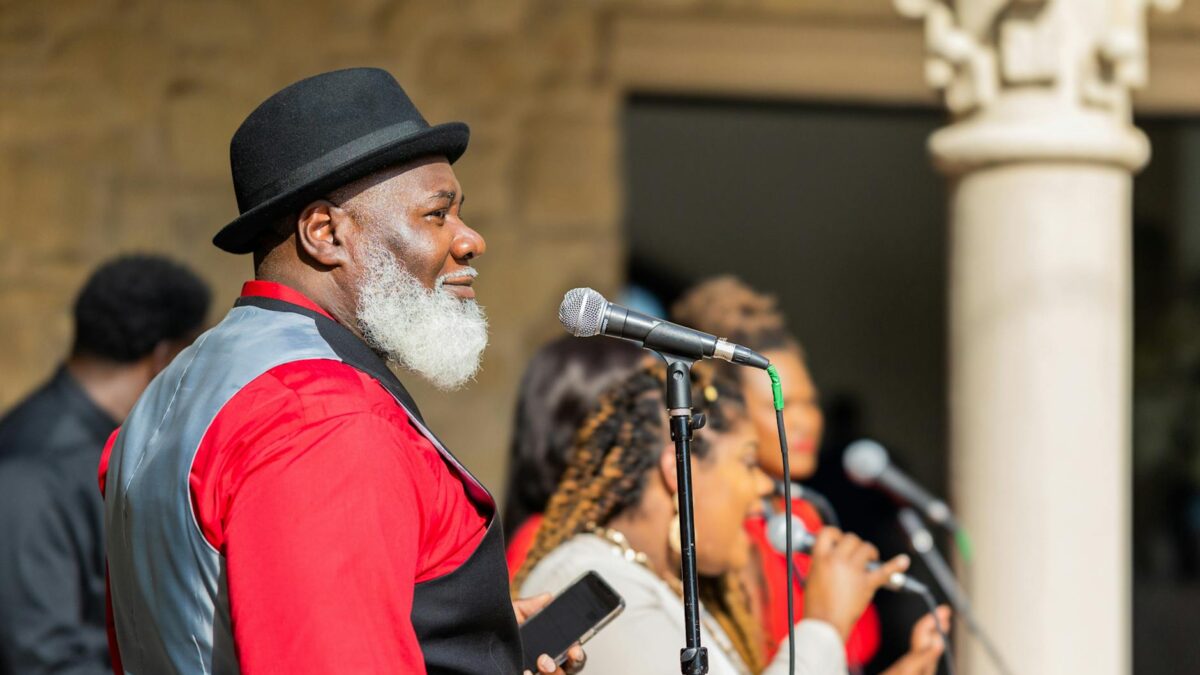
Lawrence Oyor's voice arrives like a conviction. Not a whisper, not a question, but a declaration that lands in your chest before your mind catches up. Listen to "I Have Escaped" and you understand immediately why this Lagos-based gospel artist is moving through Nigerian Christian spaces with the kind of momentum that suggests something real is happening.
The song is a spiritual chant dressed in contemporary production, built on a foundation of repetition that works like prayer. Oyor layers his vocals until they become a chorus of one, and the lyrics sit in that space between personal testimony and collective deliverance. "I have escaped from generational limitations," he sings, and it hits different when you know that escape narrative means something particular in Nigerian Christianity, in Nigerian life. This is not abstract spirituality. This is a man speaking from conviction about freedom that costs something.
Oyor grew up in Lagos, in church spaces where music was not decoration but doctrine. He sang in youth choirs, then in contemporary worship bands, watching how the best gospel musicians in Nigeria built their audience not through radio play or label machinery but through the actual spiritual authority they carried into every performance. He saw how someone like Nathaniel Bassey could command a stadium because people felt something true in the room. That shaped him. He understood early that gospel music in Nigeria works differently than it does in markets where faith is more cultural accessory. Here, if your music does not carry actual spiritual weight, people sense the hollowness immediately.
His path to "I Have Escaped" was not a straight line. Oyor spent years in local church circuits, leading worship at services that drew hundreds, building a following that was entirely organic and word-of-mouth. He was not waiting for a record deal. He was not positioning himself for industry recognition. He was doing the work that actual ministry requires: showing up, serving, playing songs that helped people pray. That foundation matters. It is why "I Have Escaped" does not feel like a calculated industry move. It feels like something this man needed to say, and then needed to share.
The production on the track is clean without being sterile. There is space in it. Oyor's voice moves through verses with conversational ease before building into those layered choruses that feel like a congregation finding its voice. The song sits somewhere between the contemplative spirituality of artists like Frank Edwards and the more energetic declarations of someone like Tope Awotona. It is contemporary enough to play on streaming platforms, spiritual enough to move in church contexts, and personal enough to feel like it belongs in both spaces without apology.
What makes Oyor worth attention right now is the precision of what he is doing. He is not trying to be the next Nathaniel Bassey or Sinach. He is not chasing the model of gospel artists who crossover into mainstream secular appeal. He is building something specific: a body of work that serves the faithful while maintaining artistic integrity, that speaks to Nigerian spiritual particularity without being narrow. "I Have Escaped" is the lead single from what he describes as a project exploring freedom as both spiritual and practical reality. That distinction matters in Nigeria, where so much of the Christian message focuses on heavenly reward at the expense of present deliverance. Oyor seems interested in both.
The reception to "I Have Escaped" across Christian platforms has been substantial. It has circulated through WhatsApp status videos, through church choir rehearsals, through the informal networks where gospel music actually reaches people in Nigeria. Music streaming numbers tell one story. The fact that the song has become something people use to pray tells another. Oyor is building the kind of loyal audience that translates into longevity, not just viral moments.
What comes next appears to be a full project later in 2026, working with producers who understand how to make spiritual music sound contemporary without making it sound hollow. There are conversations happening about collaborations with other artists in the Nigerian gospel space, artists who operate at his level of seriousness about what the music actually does. None of this has been formally announced because Oyor seems to move deliberately, choosing his moments rather than chasing them.
For now, he remains known primarily in church spaces and among people who follow gospel music seriously. That will change. Not because of industry push or algorithmic favor, but because the work is real and because Nigerian audiences have always had a way of finding artists who carry actual conviction. Lawrence Oyor is building something that will matter to a lot of people who are looking for music that does not ask them to choose between their faith and their intelligence.
OduDiscover is OduNews’s spotlight on Nigeria’s next generation of talent.