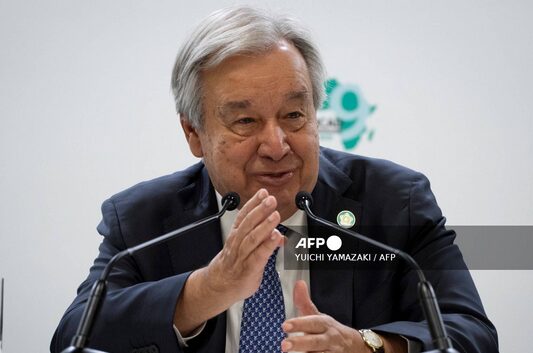
The UN Secretary-General Antonio Guterres has called for sweeping reforms to address what he describes as a historic injustice: Africa's exclusion from permanent seats on the UN Security Council.
Guterres made the call as pressure mounts within the international community to reshape the council, which has remained largely unchanged since its creation in 1945. The five permanent members, who hold veto power, are Britain, China, France, Russia, and the United States. Africa, a continent of 54 nations representing over a billion people, holds no permanent seat despite being home to nearly a quarter of the world's population.
The UN chief said the current structure fails to reflect the realities of the modern world and perpetuates an arrangement that favours former colonial powers. He argued that deeper structural reforms, not merely cosmetic adjustments, are necessary to correct this imbalance and ensure the Security Council can address contemporary global challenges effectively.
Guterres' push comes amid growing momentum from African nations and their allies who have long argued that continental representation on the Security Council is essential for legitimacy and effectiveness. The African Union has repeatedly demanded permanent seats with full veto powers, arguing that decisions affecting the continent should not be made without African voices at the table.
The call for reform also reflects frustration with how the Security Council has handled conflicts and crises on African soil, from Sudan to Libya, often with limited input from the affected nations themselves. Guterres implied that broader representation would lead to better decision-making and faster responses to continental emergencies.
However, expanding the Security Council remains politically complicated. The five permanent members must unanimously approve any changes to the council's structure, and some have shown reluctance to dilute their power. Russia and China have previously blocked or abstained from votes on expanding permanent membership, fearing it would reduce their influence.
Guterres did not specify which African nations should receive permanent seats or provide a timeline for his proposed reforms. He only emphasised that the international community must move beyond debate and take concrete action to address what he called a fundamental inequity in global governance.